PRACTICAL GUIDE
How to teach AI your business rules (without writing SQL)
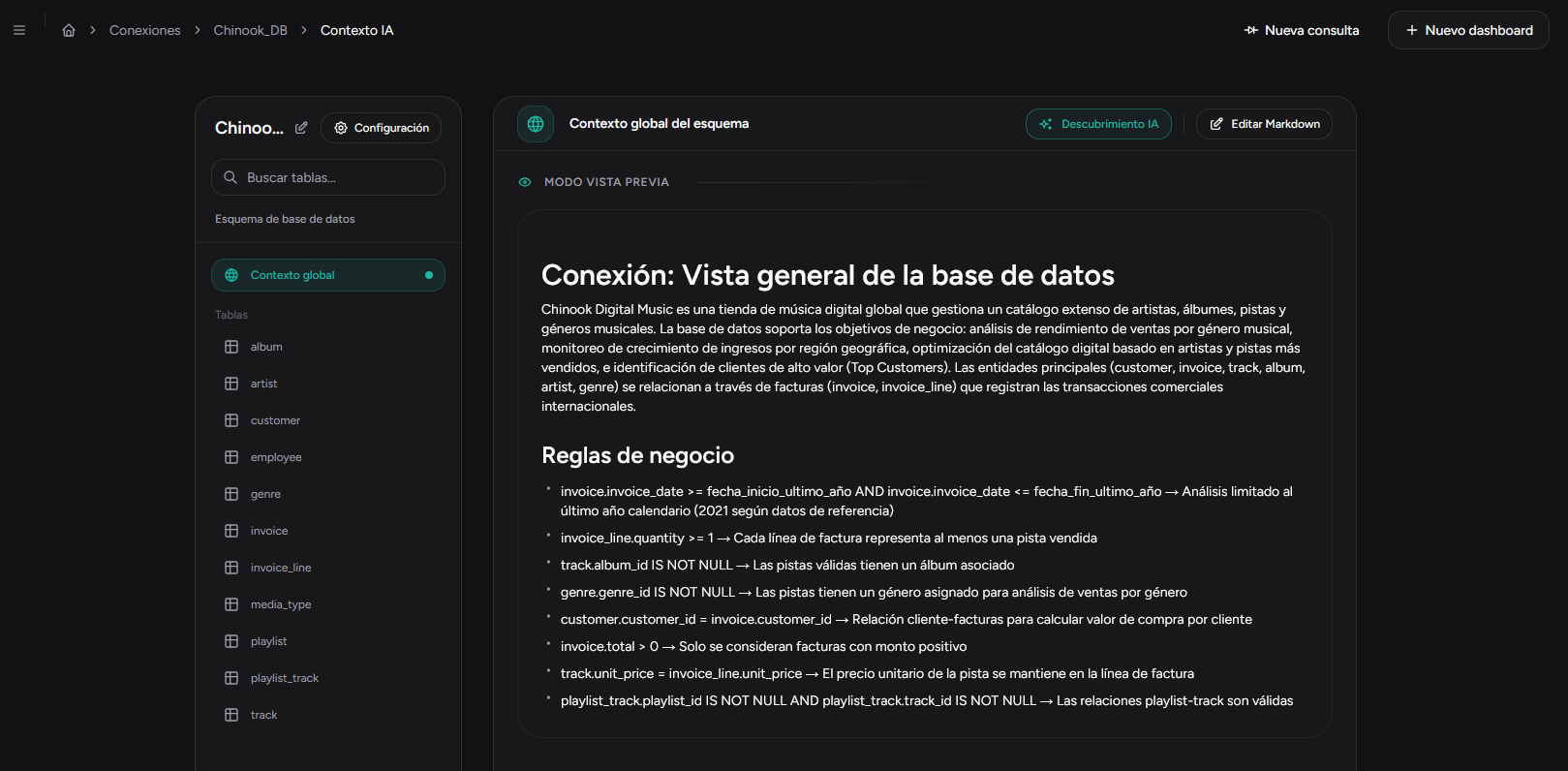
Two companies can have a table called "sales" and mean completely different things. For one, a sale is completed when payment is received. For another, when the product is delivered. If AI doesn't know your rule, dashboard numbers will be wrong even if the SQL is perfect.
The interpretation problem
Raw data doesn't speak for itself. It needs business context:
- What is a "valid sale" in your company?
- When does a customer go from active to inactive?
- Does revenue include or exclude taxes?
- How do you calculate churn: 30 days without activity or 90?
The 5 dimensions of business context
- Definitions and thresholds — what each concept means (sale, active customer, qualified lead)
- Calculation rules — how metrics are computed (revenue, margin, churn)
- Relationships — how concepts connect (an order belongs to a customer who has a salesperson)
- Exceptions — special cases (cancelled sales without refund, grace periods)
- Performance indicators — which metrics your team uses to decide
How it works in practice
Instead of writing technical documentation, you answer business questions with concrete options:
- When do you consider a sale completed?
- When the customer confirms the order
- When payment is received
- When the product is shipped
- When the customer receives the product
Those answers feed the context AI uses to generate dashboards, answer questions, and calculate KPIs correctly.
Why it matters
- Dashboards with numbers your team recognizes
- AI that responds according to your rules, not generic rules
- Less time correcting misinterpreted reports
- Faster onboarding: new members see the same numbers as everyone
Ready to see your metrics in a dashboard?
Join early access and connect your data in minutes—no SQL or manual reports.